





1.866.845.1197


Design & Layout


How does Pb-Free Affect Design/Layout?

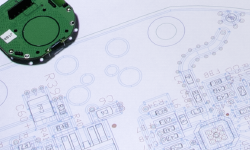
The advent of Pb-free manufacturing is having an impact on PCB design layout. In general, design rules for PB-free soldering are similar to tin lead soldering. Bringing up the netlist, making physical aspects of components or footprints, assuring component connections are correct, making board thickness calculations for impedance control or dielectric constant calculations generally do not change.

When design layout is performed and Pb-free assembly is involved, the main concern is the physical footprint on the board. If component packaging is manufactured to withstand the higher temperature for Pb-free assembly, then there is no change in the footprint and consequently, no change in the layout.

However, there can be exceptions and in these instances, it is prudent for the OEM designer to consult with a knowledgeable EMS provider to minimize issues and concerns regarding the Pb-free impact on design. For example, SMT component selection can be classified as a hardware issue, but it can have an impact on design layout if a particular component doesn't meet higher Pb-free temperature requirements.


In The News

Therefore, it is important to clearly identify the component and its package to determine whether or not it can resist certain reflow temperatures. Can it withstand temperatures in excess of 250º or 260ºC? If so, it is okay to use it because the Pb-free temperature profile ranges from 255º to 260ºC. But if the selected component can only withstand 230º to 235ºC, then it is important to replace the component with one that is properly packaged to reflow at higher temperatures.

Another design concern for Pb-free assembly can arise when the PCB has SMT components populated on both sides. SMT component populated boards ready for Pb-free assembly may have bottom side glued and re-soldered components. These components must be able to withstand solder temperature of over 250ºC. If not, they must be shielded using a wave soldering fixture (see photo of fixture).

Also at design layout, calculations for impedance control need to be made to assure that the differential impedance the fabrication vendor has specified is correct. These impedances could be single ended, dual strip-line or micro strip. The purpose of these impedances is to make sure all signals coming out of these components get to their destination as clean as possible with minimal noise or cross-talk in those signal transmissions.

Differential impedance is calculated based on the particular material, its characteristics, thickness, and level of internal layers in relationship to the ground plane. Different materials or laminates have different core thicknesses and characteristics. Impedance is calculated based on that material's thermal and electrical characteristics. If a different PCB material or laminate is used to accommodate Pb-free manufacturing, then this calculation changes, meaning the EMS provider must use different cores and thicknesses and perhaps different dielectrics and pre-preg material to fabricate the board.

It's important to note that different PCB materials (laminates) used to comply with higher temperature Pb-free fabrication requirements can affect impedance control calculations. Normally, PCB material like FR4, FR406 or FR408 can withstand upwards of 270ºC or higher. But on rare occasions, different PCB material may be required. In those cases, impedance control calculation changes would impact design layout.


Home | About Us | Industries | Pb Free | Contact Us | Login | Privacy Policy | Sitemap
Copyright 2013 by NexLogic
Website Design and Marketing by E-Nor
Follow Us!